
Budget-friendly road trip itinerary across the US: Embark on an unforgettable American adventure without breaking the bank! This comprehensive guide unveils the secrets to planning a cost-effective cross-country journey, covering everything from meticulously crafted itineraries and budget-conscious accommodation choices to delicious and affordable meal options and fuel-saving strategies. Whether you’re a seasoned traveler or a first-time road-tripper, we’ll equip you with the knowledge and tools to create a personalized adventure tailored to your budget and preferences.
Prepare to explore stunning landscapes, vibrant cities, and hidden gems, all while keeping your expenses in check.
We’ll delve into various budgeting approaches, from luxurious getaways to backpacking adventures, providing detailed sample budgets and practical tips to help you stay on track. Learn how to choose the right transportation, find affordable accommodation (from camping to budget-friendly hotels), and discover delicious and budget-friendly food options along the way. We’ll also cover essential safety tips and sustainable travel practices to ensure a smooth and responsible journey.
Get ready to hit the open road and experience the best of America without emptying your wallet!
Transportation & Fuel Efficiency
Embarking on a cross-country road trip requires careful consideration of transportation and fuel efficiency to keep costs manageable. The choice of vehicle significantly impacts both the initial investment and ongoing expenses, while smart driving habits can drastically reduce fuel consumption. This section will explore these factors, providing insights into making your journey both affordable and environmentally conscious.Choosing the right mode of transportation is crucial for a budget-friendly road trip.
Several options exist, each with its own set of advantages and disadvantages concerning cost and efficiency.
Transportation Mode Comparison
The most common mode for a cross-country trip is a car. Cars offer comfort, space for luggage, and relative ease of travel, but they come with higher initial costs (purchase or rental) and fuel consumption compared to other options. Motorcycles, while significantly cheaper to purchase and maintain, and offering better fuel economy, sacrifice comfort and luggage space. Bicycles, the most eco-friendly and economical choice, demand significant physical endurance and are impractical for carrying large amounts of luggage or covering vast distances quickly.
Therefore, the optimal choice depends on individual priorities, budget, and physical capabilities. For example, a family of four would likely choose a car for its comfort and cargo space, while a solo adventurer prioritizing minimal cost and environmental impact might opt for a motorcycle or even a bicycle for shorter distances.
Fuel Efficiency Strategies
Improving fuel efficiency is paramount for a budget-conscious road trip. Several strategies can significantly reduce fuel consumption. Maintaining proper tire pressure is crucial; under-inflated tires increase rolling resistance, leading to higher fuel consumption. Regular maintenance, such as oil changes and tune-ups, ensures the engine runs optimally, maximizing fuel efficiency. Avoiding aggressive driving habits like rapid acceleration and hard braking also significantly impacts fuel economy.
Planning your route to minimize idling and unnecessary stops also contributes to better fuel efficiency. For instance, a consistent speed of 55-65 mph on highways generally yields better fuel economy than higher speeds.
Gas Price Tracking Apps and Resources
Finding the cheapest gas prices along your route can save considerable money. Several mobile applications and online resources are dedicated to providing real-time gas price information. Popular apps include GasBuddy and AAA Mobile, which allow users to search for gas stations along their planned route and compare prices. These apps often incorporate user-submitted data, providing a reasonably accurate picture of gas prices in various locations.
Websites like GasPrices.com also offer similar functionalities, allowing for planning and route optimization based on fuel costs. Using these resources proactively can save a significant amount of money over the course of a long road trip. For example, a difference of even $0.20 per gallon on a 300-gallon tank could save $60.
Top Urban Destinations & Activities
Planning a budget-friendly road trip across the US necessitates selecting affordable yet engaging urban destinations. This section highlights five cities offering a blend of cultural experiences, historical sites, and entertainment options without breaking the bank. We will then delve into creating a sample budget-friendly weekend itinerary for one of these cities, demonstrating how to maximize your experience while minimizing expenses.
Top Five Budget-Friendly Urban Destinations
Several factors contribute to a city’s budget-friendliness, including the cost of accommodation, transportation, food, and attractions. The following five cities consistently rank highly for offering a wealth of activities at affordable prices.
- New Orleans, Louisiana: New Orleans boasts a vibrant culture, rich history, and a lively music scene, all accessible without exorbitant costs. Free activities abound, including walking tours of the French Quarter and exploring Jackson Square. Affordable food options are plentiful, from delicious po’boys to beignets.
- San Antonio, Texas: San Antonio offers a captivating blend of history and modern attractions. The River Walk is a free attraction, and exploring the Alamo is relatively inexpensive. Numerous affordable Tex-Mex restaurants cater to budget travelers.
- Pittsburgh, Pennsylvania: Pittsburgh’s revitalized urban landscape offers a mix of history, art, and outdoor activities. Free attractions include walking along the riverfront, exploring the city’s many parks, and visiting the Andy Warhol Museum (consider free admission days). The city also features many affordable ethnic eateries.
- St. Louis, Missouri: St. Louis offers a range of attractions, from the iconic Gateway Arch (consider purchasing tickets in advance for discounts) to the free Forest Park, home to several museums. The city also boasts a thriving food scene with various affordable options.
- Nashville, Tennessee: While Nashville’s music scene can be expensive, it’s possible to enjoy the city on a budget. Free activities include exploring the Country Music Hall of Fame and Museum’s exterior and strolling through Centennial Park. Many affordable honky-tonks offer live music at no cover charge.
Budget-Friendly Weekend Trip to New Orleans
This itinerary focuses on a weekend trip to New Orleans, highlighting free and affordable activities and food options.
Friday Evening:
Arrive in New Orleans and check into your budget-friendly accommodation (consider Airbnb or a hostel). Enjoy a stroll through the French Quarter, taking in the architecture and atmosphere. Grab a late-night beignet from Cafe Du Monde (relatively inexpensive).
Saturday:
Start your day with a free walking tour of the French Quarter, learning about the city’s history and culture. Visit Jackson Square to watch street performers and artists. Have lunch at a po’boy shop for an affordable and delicious meal. In the afternoon, explore the Garden District, admiring the beautiful mansions. Enjoy a free concert in a local park (check local listings for events).
For dinner, try a local seafood boil – a delicious and often affordable option.
Sunday:
Visit the French Market for souvenirs and local crafts. Enjoy brunch at a local cafe. Spend the afternoon exploring the city’s cemeteries or museums (check for free admission days or discounted tickets). Depart from New Orleans.
Categorized List of Urban Activities
This table categorizes various urban activities, providing a comprehensive resource for planning your city explorations.
| Top Urban Destinations | Best Cities for Nightlife | Shopping Travel Guides | Urban Architecture Tours |
|---|---|---|---|
| New York City | Las Vegas | New York City | Chicago |
| Los Angeles | Miami | Los Angeles | New Orleans |
| Chicago | Nashville | San Francisco | San Francisco |
| San Francisco | New Orleans | Austin | Boston |
| Boston | Austin | Portland | New York City |
| Street Food and Markets | City Travel Hacks | Metro Adventures | Skyscraper Destinations |
| Los Angeles | Using public transportation | New York City Subway | New York City |
| New York City | Finding free activities | Chicago ‘L’ Train | Chicago |
| Portland | Utilizing discount websites | San Francisco BART | San Francisco |
| San Francisco | Booking accommodation in advance | Washington D.C. Metro | Los Angeles |
| Chicago | Packing light | Boston’s “T” | Seattle |
| Urban Photography Tips | Urban Parks and Green Spaces | ||
| Use natural light | Central Park (NYC) | ||
| Find unique angles | Golden Gate Park (SF) | ||
| Experiment with composition | Millennium Park (Chicago) | ||
| Capture the city’s energy | Boston Common | ||
| Edit your photos | Forest Park (St. Louis) |
Safety & Emergency Preparedness
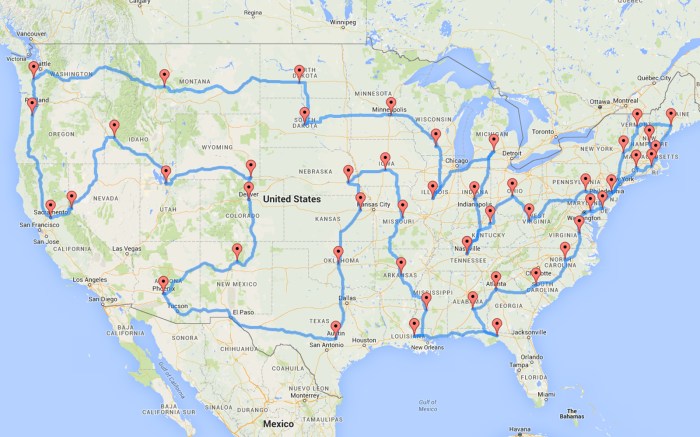
A budget-friendly road trip shouldn’t compromise safety. Thorough planning and preparedness are crucial for a smooth and enjoyable journey across the US. Unexpected events can occur, and being ready for them will significantly reduce stress and potential hazards.A well-stocked emergency kit and a proactive approach to potential problems are key components of a safe road trip. Knowing how to handle minor car troubles or more serious emergencies can make all the difference in a challenging situation.
This section Artikels essential safety measures and strategies for dealing with unforeseen circumstances.
Essential Items for a Safe Road Trip, Budget-friendly road trip itinerary across the US
Having a well-equipped emergency kit is paramount. This kit should be readily accessible and contain items that can address various scenarios. A comprehensive kit will provide peace of mind and the tools necessary to handle minor issues before they escalate.
- First-aid kit: Including bandages, antiseptic wipes, pain relievers, and any personal medications.
- Jumper cables: For jump-starting a dead battery.
- Flashlight with extra batteries: Essential for nighttime emergencies.
- Tire pressure gauge and inflator: For checking and adjusting tire pressure.
- Basic tools: Screwdrivers, wrench, pliers – for minor repairs.
- Reflective triangles or flares: To warn other drivers in case of a breakdown.
- Cell phone charger: Keep your phone powered for communication.
- Water and non-perishable snacks: For sustenance in case of delays.
- Map and compass (or GPS device with offline maps): Navigation in areas with poor cell service.
- Emergency blanket: For warmth in cold weather.
Strategies for Dealing with Unexpected Car Trouble
Car trouble can happen anywhere, anytime. Being prepared to handle minor issues yourself can save time and money. Knowing what to do in more serious situations can ensure your safety and prevent the situation from worsening.
- Regular vehicle maintenance: Preventative maintenance reduces the likelihood of breakdowns. Check oil, fluids, and tire pressure before embarking on your trip.
- Knowing your vehicle: Familiarize yourself with your car’s basic mechanics and how to perform simple tasks like changing a tire.
- Roadside assistance: Consider purchasing roadside assistance coverage for peace of mind. Many auto insurance policies offer this, but it’s wise to check your coverage.
- Safe breakdown procedures: If you experience car trouble, pull over to a safe location away from traffic. Turn on hazard lights, use reflective triangles, and call for help.
- Communication plan: Have a pre-arranged communication plan with family or friends, including your planned route and regular check-in times.
Staying Safe While Traveling Alone or in a Small Group
Traveling alone or with a small group requires extra vigilance. Prioritizing safety and taking proactive steps will ensure a more secure journey. Sharing your itinerary and maintaining open communication are key elements of a safe trip.
- Inform others of your plans: Share your itinerary with family or friends, including planned stops and estimated arrival times.
- Avoid driving at night if possible: Night driving increases the risk of accidents and makes it harder to see potential hazards.
- Stay alert and aware of your surroundings: Be mindful of your surroundings, especially in unfamiliar areas.
- Trust your instincts: If a situation feels unsafe, remove yourself from it.
- Secure your belongings: Keep valuables out of sight and lock your car doors at all times.
Sustainable Travel Practices: Budget-friendly Road Trip Itinerary Across The US
Embarking on a budget-friendly road trip across the US doesn’t necessitate compromising environmental responsibility or neglecting the communities you visit. By adopting sustainable travel practices, you can minimize your impact while enriching your journey and supporting local economies. This section details practical strategies for environmentally conscious and community-focused road tripping.Minimizing your environmental footprint during a cross-country road trip requires a multifaceted approach.
Consider these key areas for improvement.
Reducing Carbon Emissions
Choosing fuel-efficient vehicles is paramount. Smaller cars, hybrids, or even electric vehicles (if feasible for your route) significantly reduce your carbon footprint compared to larger gas-guzzling vehicles. For example, a hybrid car can achieve significantly better fuel economy than a traditional SUV, translating to fewer emissions. Furthermore, careful driving habits like maintaining a steady speed, avoiding rapid acceleration and braking, and properly inflating tires contribute to better fuel efficiency and reduced emissions.
Consider carpooling to share the journey and lessen the overall environmental impact. Planning your route efficiently, minimizing detours and unnecessary driving, also helps.
Supporting Local Businesses
Prioritizing local businesses during your road trip offers significant economic benefits to the communities you visit, strengthens their economies, and promotes authenticity in your travel experience. Instead of relying solely on large chain restaurants and hotels, seek out locally owned eateries, motels, and attractions. For example, trying a local diner instead of a fast-food chain not only supports the local economy but also provides a unique culinary experience.
Purchasing souvenirs from local artisans and craftspeople directly contributes to their livelihoods and supports unique cultural expressions. Choosing to stay in locally owned accommodations, such as bed and breakfasts or smaller motels, offers a more personalized experience and injects money directly into the local economy, instead of larger hotel chains.
Slow Travel and Mindful Tourism
Slow travel emphasizes experiencing a destination deeply rather than rushing through it. This approach encourages mindful tourism, focusing on respecting the environment and local cultures. Instead of cramming multiple destinations into a short time frame, allow yourself ample time to explore each location thoroughly. This reduces your overall travel impact, enabling you to appreciate the local culture and environment more fully.
For example, spending a few days in a national park, truly immersing yourself in its beauty and hiking its trails, is far more impactful than just driving through. Similarly, spending more time in a smaller town, engaging with the locals, and exploring its unique offerings provides a more authentic and sustainable travel experience compared to a rapid tour of many larger cities.
Planning a budget-friendly road trip across the US is achievable with careful planning and resourcefulness. By utilizing the strategies and tips Artikeld in this guide, you can create a memorable and enriching experience without compromising on quality or adventure. Remember, the key is to balance your desires with your budget, embracing flexibility and resourcefulness to create a unique and personalized journey across the vast and diverse landscapes of America.
So pack your bags, map out your route, and get ready for an unforgettable adventure!
FAQ Resource
What is the best time of year to take a budget-friendly road trip across the US?
Shoulder seasons (spring and fall) generally offer pleasant weather and lower prices than peak summer months.
How can I avoid getting scammed while on a road trip?
Be wary of unsolicited offers, verify accommodation and tour operators beforehand, and use secure payment methods.
What are some essential safety precautions for solo female travelers?
Share your itinerary with someone, stick to well-lit areas at night, and be aware of your surroundings.
Can I bring my pet on a road trip?
Yes, but ensure your pet has proper identification, is comfortable traveling, and you comply with any pet travel restrictions.


